On Transition ¶ My transition coat, a trench coat, hangs in my wardrobe; there is hardly any opportunity to wear it anymore. ¶ A friend and I have noticed and regret that there are no longer any transitional seasons in which we can wear our beautiful coats. ¶ I used to wear my transition coat from March to June. Today, it’s just two to three weeks in spring, and while we are still wearing winter coats one day, the next day we are able to walk around in short sleeves.¶ The term or garment known as a “transition coat” is disappearing from our vocabulary and wardrobes. ¶ We lament the loss of the seasonal transition, yet we are entirely and permanently in transition. In the process of becoming. In development. In decay. We are never finished, always changing. Until we have passed and take on another form, and even then we are in a constant process of change. But we want to see definitive, concrete results. ¶ The transition is viewed disparagingly: “It’s just a transition, a temporary solution, a provisional arrangement. Not a definitive solution, an idea of being for me, for us, for anything.” ¶ Something must be completed, before our eyes, crafted by us. ¶ A book is only read or looked at when it is finished; letters are drawn so that they can be used. Houses are built, and if not, they are useless, worthless, ruins even before they could have collapsed. ¶ Transition is something abstract, temporary, ephemeral. It is not taken seriously; it is underestimated. And yet it is necessary, in every form in which it manifests itself like transition as a structural measure for crossing, traversing, passing over, crossing, passing through: a level crossing, a border crossing, a bridge, a tunnel, a mountain pass. ¶ Transition is a change to another place, state or stage. 


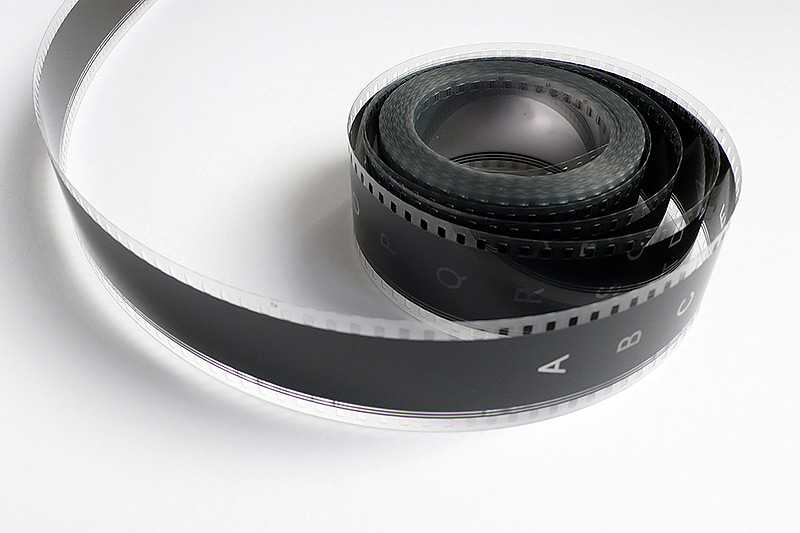
Where does transition begin? Where does it end? When do we speak of transition? When do we no longer speak of it? Can transition be archived? What about transition in the context of font development and design? Can transition be represented? ¶ A colour gradient is the visible transition from one colour to another. A structural transition has clearly recognisable boundaries. ¶ A word, on the other hand, cannot be transformed into another and observed in the process, nor can a state. We can capture individual stages and phases of processes in images and view them retrospectively, frozen in time, like film stills. ¶ A (forward) movement that lasts long enough is recognised as a coherent phenomenon: a film as a sequence of moving images at 25 frames per second is not perceived as a transition from one frame to the next, but as a unit, just as a word is read not as a sequence of letters, but as a unit, as an image. ¶ Like everything that is in motion, constantly changing, in transition, type, the sign, the signifier as a carrier of content, signifier and technology of use, is also subject to constant revision and reformulation. Only at the moment of use is there an apparent standstill, a freezing. ¶ In contrast, the content, the signified, is by no means frozen. Typefaces are not created within a short period of time, but rather require several months, if not years, to develop, including their styles. 


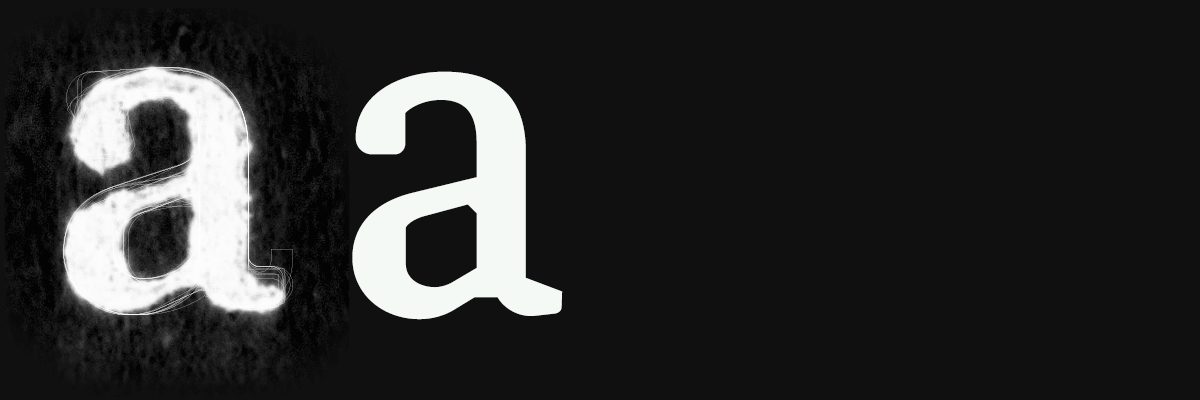
Typeface development requires not only time-consuming labour, but also the media technology of the particular time or era. ¶ Media never develop in isolation; new media do not immediately replace older ones, but rather overlap for a time and sometimes coexist for long periods (decades or centuries). When an existing medium becomes obsolete and a new one emerges, there are transitional stages in production techniques and technology that only last for a certain period of time and are difficult to grasp at the moment. ¶ It is interesting to note that the techniques used in the transition from or between one form and another are not collected because they cannot be pinned down. An example: Type production has seen technical highlights such as lead typesetting and phototypesetting, with a transitional technological phase in between featuring interim results of a development that was partly unintentional, but which was not recorded or documented and therefore not collected. It could be a craft or technical development, a tool or whatever – basically it is something improvised, from which something new develops and possibly becomes established. ¶ These transitional forms are rarely included in collections because they do not represent a high point. Lead typesetting and phototypesetting are, so to speak, the low points of the auxiliary means but not of development. In this context, these were the Linotype and the Monotype typesetting machine, which made it possible to typeset texts at high speed. ¶ Binnenland focuses primarily on the technical transition: “An idea that appeals to us and motivates us, in a sense, is to transform and rethink what already exists, to offer new approaches (and new ways of thinking) rather than designing something entirely new. ¶ Our idea is to establish a status quo in our work that is appropriate to type, especially to a text typeface, which is a captured moment of a constantly changing means of communication, to freeze the moment – because it can only be a moment that is captured – in order to create an image of something that is constantly in motion.”